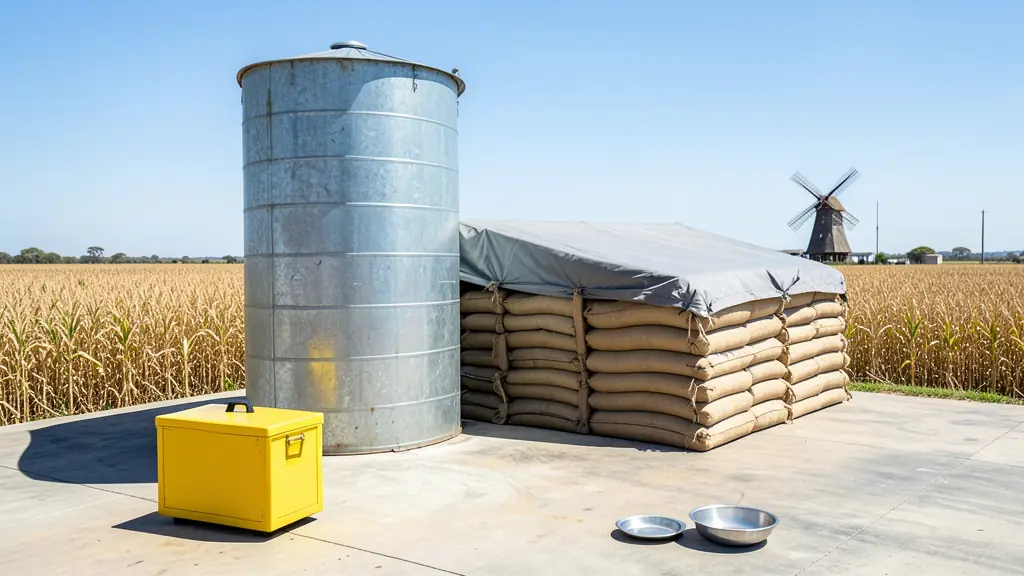
Grain fumigation kills weevils, moths and beetles that breed inside stored maize, wheat, sorghum, soya and flour. A licensed applicator seals the silo or the stack and releases phosphine, which reaches every kernel. Farmers, co-ops and mills usually ask for it when they see live insects or heating grain. The product is a restricted pesticide, so it is not a do-it-yourself job. Send one request with the tonnage and the store type, and fumigators near you quote free of charge.
The insects you are fighting
The maize weevil lays eggs inside the kernel, and the grub grows out of sight, so grain can look clean while carrying a full generation. At about 28 °C a life cycle takes four to five weeks. The lesser grain borer bores through kernels, grain moths spin webbing across the top of bags, and flour beetles live in mills, meal and dust in cracks.
Warm, damp grain breeds all of them faster. Maize stored above about 12.5% moisture gets worse quickly, so dry grain and clean stores matter as much as any gas.
Tablets, pellets and sealing the store
Phosphine comes as aluminium phosphide tablets or pellets. They absorb moisture from the air and slowly give off the gas. Dosing is per tonne or per cubic metre, in line with the label, and the pellets sit on trays or are probed into the grain.
The seal is what makes the job work. Silos are sealed at hatches and outlets with tape. Bag stacks go under gas-tight sheets laid on the floor and joined, with sand snakes along every edge. A leaking seal wastes the dose and breeds survivors, so a good applicator tests the seal first. Related stock-room work is described under pest control.
Exposure time, temperature and resistance
Gas works only while the insects are breathing it, and cold grain slows them down. Above about 25 °C expect seven days of exposure, and ten days or more at 15 to 20 °C. Below 15 °C fumigation is unreliable, and applicators often wait for warmer weather.
Underdosing and leaky stores have led to phosphine resistance in some populations, so the same dose no longer kills them. Prevention helps: sweep empty stores, treat cracks with a residual spray before filling, and aerate the grain to keep it cool.
Safety, licensing and cost
Phosphine is highly toxic, and a faint garlic smell is not a reliable warning. The applicator wears a respirator, uses a gas monitor, posts warnings and aerates until readings fall below the safe limit. It also tarnishes copper and brass, so electrical fittings may need covering. Insist on registered, licensed applicators. Prices run about R25 to R70 per tonne, higher for small lots. For port-bound grain, see container fumigation. Rats in the same store are covered under rodent control.
What to include in your request
- Grain type and tonnage
- Silo, shed or bag stack, with size
- Moisture and current temperature
- Where live insects were found
- Nearest town and access for a bakkie
Grain Fumigation for different properties
- Homes and families: rarely needed; a small pantry infestation is handled with bait and a clean-out instead
- Landlords, agents and body corporates: not usually relevant, apart from a landlord with a stored grain or feed store
- Restaurants and food businesses: mills, bakeries and feed makers treating flour, meal and raw material stores
- Hotels, guesthouses and lodges: seldom relevant, except lodges with large dry food stores treated by a registered operator
- Offices, schools, clinics and shops: not usually relevant, though a staff canteen store may need a pest control visit
- Factories, warehouses and mines: silos, mills and feed plants with recurring weevils or moths in grain and dust
- Farms, grain stores and smallholdings: treating maize, wheat and sorghum in silos, sheds and bag stacks before sale
- Exporters and freight forwarders: treating grain at a depot or silo complex so it meets the buyer's requirements
Frequently asked questions
Can I buy fumigation tablets and use them myself?
How do I know my grain has insects?
Is grain safe to use after fumigation?
Does fumigation protect the grain afterwards?
Grain Fumigation by province and city
- Johannesburg
- Pretoria
- Centurion
- Midrand
- Sandton
- Randburg
- Roodepoort
- Krugersdorp
- Randfontein
- Germiston
- Boksburg
- Benoni
- Kempton Park
- Alberton
- Vanderbijlpark
- Vereeniging
- Durban
- Pinetown
- Pietermaritzburg
- Richards Bay
- Newcastle
- Ladysmith
- Gqeberha (Port Elizabeth)
- East London
- Kariega (Uitenhage)
- Mthatha
- Cape Town
- Bellville
- Paarl
- Stellenbosch
- George
- Worcester
- eMalahleni (Witbank)
- Middelburg
- Secunda
- Mbombela (Nelspruit)
- Rustenburg
- Brits
- Klerksdorp
- Potchefstroom
- Mahikeng
- Polokwane
- Tzaneen
- Kimberley
- Upington
- Bloemfontein
- Welkom
- Sasolburg