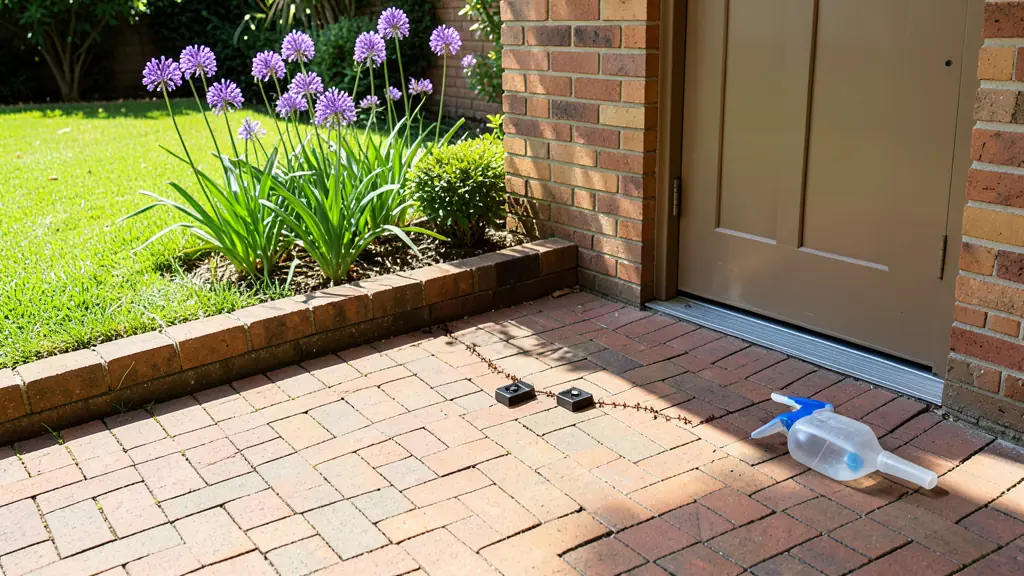
Ants are the pest that most people try to fix themselves and often make worse. Spraying the trail in the kitchen kills the workers you can see, but the queens and thousands of workers stay in the nest. Several species give South Africans trouble: Argentine ants, pugnacious ants, brown house ants and the sugar ants that crowd a spill. The cure is to feed the colony something slow and toxic. Send one request and pest controllers near you quote for free.
The ants that bother South Africans
Argentine ants are small, pale brown and form huge, mat-like trails, especially in the Western Cape. They run many nests and queens, and they swarm into kitchens when the weather turns dry or wet. Pugnacious ants are slightly larger and dark; they nest under paving and in lawns and bite, and they raid gardens. Brown house ants and tiny sugar ants walk straight to sweet food, honey and pet bowls. Match the ant to the treatment, so photograph it or catch a few in a sealed jar. Flying ants that appear after the first summer rains are the breeding males and queens leaving a mature nest, and are a sign that one sits close to the house.
Why sprays fail and baits work
Contact sprays repel ants or kill the workers on the trail, and the colony simply makes more. Sprays can also cause a colony to split into several smaller colonies, which spreads the problem. A slow-acting liquid or gel bait with boric acid or a low dose of fipronil or imidacloprid in a sugar or protein base is carried back to the nest. Workers share it with the queen and larvae, and the colony fades in one to three weeks.
Do not wipe away or spray the trail while baits are out. If the ants stop taking the bait, the sugar-protein preference may have changed, and the technician will switch to a different bait.
Electrical boxes, gardens and paving
Ants love the warmth of electrical boxes, pool pumps, geysers and gate motors. They can short out switches and fill DB boards with debris, so only treat these with a dust applied by the technician, never with water-based spray, and switch off the power when asked. In the garden, ants in paving and lawn are treated with granules or a drench poured into the nest. Trim shrubs touching the wall, keep mulch back from the foundation and see our pest control page for the full perimeter service.
Prevention and cost
Seal gaps around window frames and pipes, store honey, sugar and pet food in lidded containers, and rinse recycling. Ants also farm aphids and mealybugs on plants, so treat those too. A kitchen and perimeter bait treatment is about R500 to R1,200, and a full house and garden service about R1,000 to R2,500. Compare in the price guide. Ask whether a repeat visit is included, since one bait round seldom clears a big garden.
What to include in your request
- Photo or sample of the ant
- Inside, garden, paving or electrical box
- Property and garden size in m²
- How long and which season it started
- Pets, children or a borehole near the garden
Ant Control for different properties
- Homes and families: a kitchen bait treatment with a perimeter spray and nest drenching in the garden
- Landlords, agents and body corporates: a treatment before a new tenant arrives, with a follow-up visit for returning trails
- Restaurants and food businesses: bait placed away from food zones, with records of each visit for the audit file
- Hotels, guesthouses and lodges: gardens, braai areas, pool equipment and kitchens treated without upsetting guests
- Offices, schools, clinics and shops: break rooms, reception areas and server cupboards treated with dusts and gels
- Factories, warehouses and mines: control panels, loading bays and paved yards treated with dusts and baits
- Farms, grain stores and smallholdings: farm stores, dairy sheds and orchards treated, including ants that tend aphids on crops
- Exporters and freight forwarders: yards, pack houses and warehouse walls checked so ants do not get into stored cargo
Frequently asked questions
Why do ants keep coming back?
Are bait stations safe for pets?
How long does it take to get rid of ants?
Can ants damage my house?
Ant Control by province and city
- Johannesburg
- Pretoria
- Centurion
- Midrand
- Sandton
- Randburg
- Roodepoort
- Krugersdorp
- Randfontein
- Germiston
- Boksburg
- Benoni
- Kempton Park
- Alberton
- Vanderbijlpark
- Vereeniging
- Durban
- Pinetown
- Pietermaritzburg
- Richards Bay
- Newcastle
- Ladysmith
- Gqeberha (Port Elizabeth)
- East London
- Kariega (Uitenhage)
- Mthatha
- Cape Town
- Bellville
- Paarl
- Stellenbosch
- George
- Worcester
- eMalahleni (Witbank)
- Middelburg
- Secunda
- Mbombela (Nelspruit)
- Rustenburg
- Brits
- Klerksdorp
- Potchefstroom
- Mahikeng
- Polokwane
- Tzaneen
- Kimberley
- Upington
- Bloemfontein
- Welkom
- Sasolburg