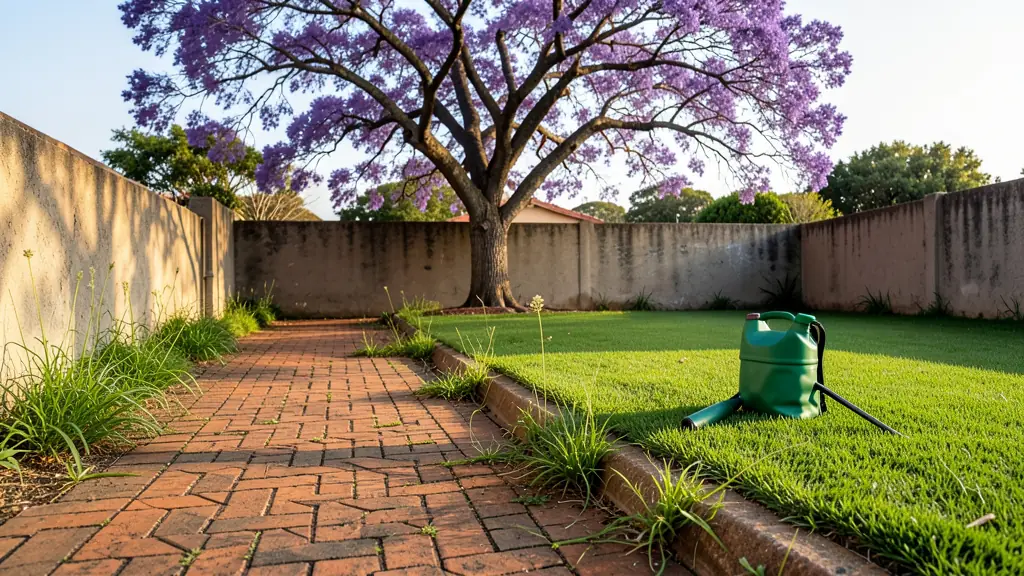
Weed control keeps paving, driveways, lawns, car parks and industrial yards tidy, and keeps fire breaks clear on plots and farms. The right method depends on the weed and the surface: a selective product kills broadleaf weeds in a lawn without harming the grass, while a total product clears gravel and paving. Send one request with the area in square metres, the weeds and the surface, and registered operators near you quote directly. It is free and there is no obligation.
Pre-emergent or post-emergent
Herbicides work at two different moments. A post-emergent product, such as glyphosate, is sprayed on weeds that are already growing and travels down to the roots. It is the usual choice for paving, driveways and kerbs. A pre-emergent product goes onto bare soil or gravel before weeds germinate and forms a barrier that stops seeds sprouting for weeks to months.
Professionals often combine them: kill what is growing, then lay down a pre-emergent to delay the next flush. Timing matters. In summer rainfall areas, weeds surge from October, while in the Western Cape winter rain brings the main flush. Spray when weeds are actively growing, and avoid rain for several hours after.
Selective killers for lawns
A selective lawn weed killer targets broadleaf weeds such as dandelion, clover, bindii and plantain, and leaves grasses unharmed. Kikuyu, buffalo and Bermuda tolerate different products, so tell the operator which lawn you have. Grass weeds like nutgrass and crabgrass need a different product again.
Keep pets and children off until the spray has dried, and avoid mowing for a day or two so the herbicide reaches the roots. A thick, well-fed lawn is the best defence, because weeds only take hold in bare patches. Cutting the lawn too short makes this worse.
Industrial sites, plots and fire breaks
Factories, warehouses, rail sidings and car parks need weeds cleared along fences, drains and bases of buildings, where roots lift paving and hide rodents and snakes. A total herbicide with a residual component can keep gravel clear for months. On plots and farms, a fire break strip is often cleared in late autumn before the dry season, either by mowing, grazing or herbicide. Local fire protection associations and municipalities set the rules, so check them.
Invasive alien plants such as lantana, bugweed and black wattle are regulated under the National Environmental Management: Biodiversity Act (NEMBA), and owners can be required to control them. We cannot give legal advice, but a registered operator can advise on safe treatment near watercourses.
Choosing a registered operator
Anyone who sprays herbicide for payment should be registered as a pest control operator under Act 36 of 1947 with the Department of Agriculture. Ask for the registration number, the product and its registration number, and the safety data sheet. Natural options such as boiling water, salt or vinegar sometimes scorch leaves but rarely kill roots, and salt can ruin soil. See pest control products for how to read a label, and the price guide for typical rand amounts.
What to include in your request
- Area to treat in m² or hectares
- Surface: paving, gravel, lawn or soil
- Weeds or a photo of them
- Pets, ponds or vegetable beds nearby
- Once-off or a seasonal contract
Weed Control for different properties
- Homes and families: weeds killed in paving and driveways, a selective lawn treatment or a cleared boundary strip
- Landlords, agents and body corporates: tidying of common areas, pavements and parking bays between tenants or before an inspection
- Restaurants and food businesses: weeds cleared around buildings, bins and drains to remove cover for rodents and insects
- Hotels, guesthouses and lodges: gravel paths, paving and lawns kept neat for guests, with products suited to pets
- Offices, schools, clinics and shops: car parks, kerbs, paving and landscaped beds kept clear on a seasonal contract
- Factories, warehouses and mines: total herbicide on gravel yards, rail sidings and fence lines, with residual cover for months
- Farms, grain stores and smallholdings: fire breaks, fence lines, dam walls and invasive plants cleared before the dry season
- Exporters and freight forwarders: weed-free depot yards, container stacks and truck bays to cut cover for pests
Frequently asked questions
How long before weeds die?
Is natural weed control effective?
Is weed killer safe for pets and children?
How often must I treat?
Weed Control by province and city
- Johannesburg
- Pretoria
- Centurion
- Midrand
- Sandton
- Randburg
- Roodepoort
- Krugersdorp
- Randfontein
- Germiston
- Boksburg
- Benoni
- Kempton Park
- Alberton
- Vanderbijlpark
- Vereeniging
- Durban
- Pinetown
- Pietermaritzburg
- Richards Bay
- Newcastle
- Ladysmith
- Gqeberha (Port Elizabeth)
- East London
- Kariega (Uitenhage)
- Mthatha
- Cape Town
- Bellville
- Paarl
- Stellenbosch
- George
- Worcester
- eMalahleni (Witbank)
- Middelburg
- Secunda
- Mbombela (Nelspruit)
- Rustenburg
- Brits
- Klerksdorp
- Potchefstroom
- Mahikeng
- Polokwane
- Tzaneen
- Kimberley
- Upington
- Bloemfontein
- Welkom
- Sasolburg