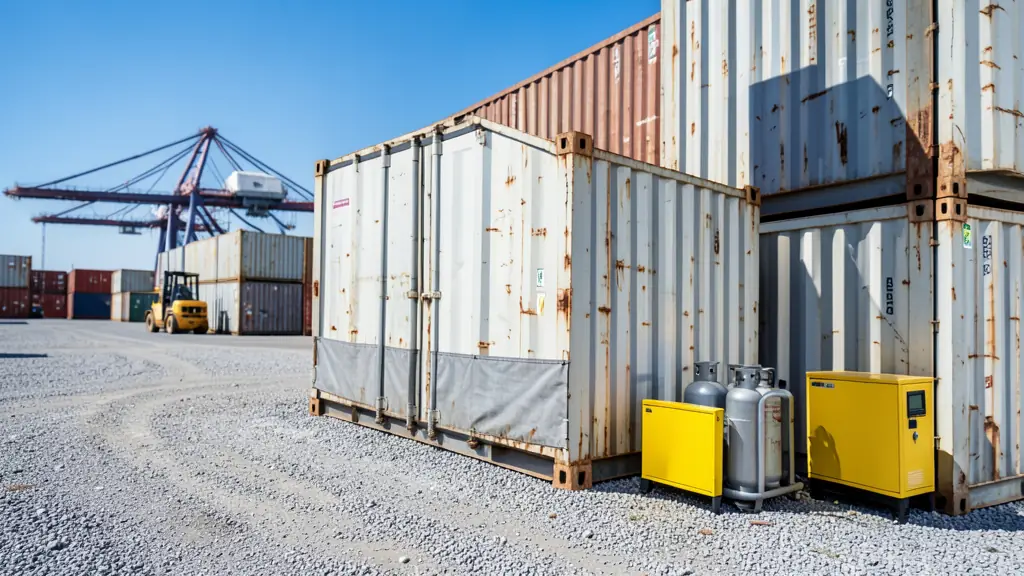
Container fumigation treats the cargo, pallets and packing inside a closed shipping container with gas, so that insects do not travel overseas with it. Exporters usually need it when the importing country asks for a fumigation certificate. Importers sometimes face containers that arrive still under gas. Send one request with the cargo, the port and your sailing date, and registered fumigators in your area quote you directly. It is free and you are under no obligation.
Phosphine, methyl bromide and ISPM 15
Most container cargo is treated with phosphine, which works on wood, grain, dried fruit and timber products at a set dose and for a set time. Methyl bromide is an ozone-depleting gas, restricted under the Montreal Protocol, and is now permitted mainly for quarantine and pre-shipment work where no alternative is accepted.
Wooden pallets and crates fall under ISPM 15. Wood packaging must be treated by heat (HT, 56 °C at the core for 30 minutes) or by methyl bromide (MB), and carry the IPPC mark showing the country code, the producer number and the treatment. Heat treatment of the pallet is usually cheaper and simpler than fumigating the container, so check your pallets first.
What a fumigation certificate shows
A certificate is the document that goes with your bill of lading. It normally names:
- The container number, seal number, cargo and quantity.
- The fumigant, the dose, the exposure time and the temperature.
- The date, place and start and end times of treatment.
- The operator's registration details and a declaration of the treatment.
Importing countries set their own rules, so check with your freight forwarder or the importing country's requirements before you book. A wrong dose or an old certificate can mean a rejected shipment.
Exposure, venting and imports
Gas must stay in long enough to reach every carton, which means roughly two to five days at phosphine doses, shorter when it is warm and longer when it is cold. Pallets that are packed too tightly or wrapped in sealed plastic stop the gas getting in. The doors are then opened under controlled ventilation and the container is tested to prove it is gas-free.
For imports, a container marked as fumigated must be vented and cleared with a gas-free certificate before anyone unpacks it. Terminal staff will not release it otherwise. Ports such as Durban, Cape Town, Gqeberha and Coega each have depots where this is done, and your clearing agent can book it.
Booking and what it costs
Fumigation is normally done in the depot yard just before the container is gated in, so book it a few days ahead of the cut-off. Prices run from about R900 to R2,500 per container, depending on size, cargo, port and whether a certificate is needed on the day. Add transport if the container must move to a treatment area. See also fumigation services and grain fumigation for bulk commodities.
What to include in your request
- Container size, 20 ft or 40 ft
- Cargo and whether it is wooden or food
- Port, depot and gate cut-off date
- Destination country or buyer's rules
- Export or import
Container Fumigation for different properties
- Homes and families: rarely needed, except for a household move shipped overseas with antique wooden furniture
- Landlords, agents and body corporates: not usually relevant, apart from furniture or goods being shipped in a container
- Restaurants and food businesses: treating packed dry food, dried fruit, nuts and spices before export or after import
- Hotels, guesthouses and lodges: treating wooden decor and furniture for a lodge fit-out arriving from abroad
- Offices, schools, clinics and shops: treating office furniture and archives shipped as part of a relocation
- Factories, warehouses and mines: treating machinery crates and wooden dunnage, with a certificate for the shipping line
- Farms, grain stores and smallholdings: treating maize, soya, citrus pallets and seed before export to Asia, Europe or the Middle East
- Exporters and freight forwarders: exporters of timber, grain, fruit and goods on wooden pallets needing a certificate to match the bill of lading
Frequently asked questions
Does every export container need fumigation?
How long does container fumigation take?
Can I fumigate a container myself?
What if my pallets are not ISPM 15 treated?
Container Fumigation by province and city
- Johannesburg
- Pretoria
- Centurion
- Midrand
- Sandton
- Randburg
- Roodepoort
- Krugersdorp
- Randfontein
- Germiston
- Boksburg
- Benoni
- Kempton Park
- Alberton
- Vanderbijlpark
- Vereeniging
- Durban
- Pinetown
- Pietermaritzburg
- Richards Bay
- Newcastle
- Ladysmith
- Gqeberha (Port Elizabeth)
- East London
- Kariega (Uitenhage)
- Mthatha
- Cape Town
- Bellville
- Paarl
- Stellenbosch
- George
- Worcester
- eMalahleni (Witbank)
- Middelburg
- Secunda
- Mbombela (Nelspruit)
- Rustenburg
- Brits
- Klerksdorp
- Potchefstroom
- Mahikeng
- Polokwane
- Tzaneen
- Kimberley
- Upington
- Bloemfontein
- Welkom
- Sasolburg