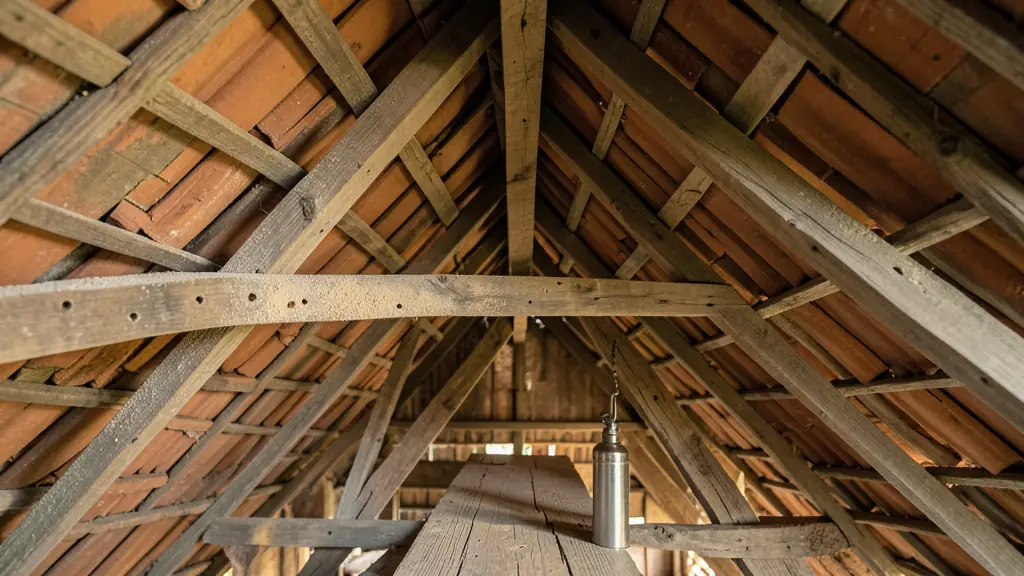
Wood borer is the name for beetles whose larvae tunnel through dry timber for years before anyone notices. The first clue is usually a scatter of small round holes and fine, pale dust under a roof beam, an old cupboard or a floor joist. Send one request with the position, the age of the timber and a photo of the holes, and registered pest controllers in your area quote you directly. It is free and there is no obligation.
The beetles and how they work
Most borer in South African homes is the common furniture beetle or the powder post beetle. The female lays eggs in cracks and old exit holes. The larvae eat inside the wood for one to several years, depending on the timber, moisture and temperature, then pupate just under the surface. The adult chews out through a small round exit hole of one to three millimetres, mates and lays again.
Powder post beetles prefer the starchy sapwood of hardwood and leave very fine, flour-like dust. Furniture beetles attack softer timber such as pine and leave coarser, gritty frass. Both signs matter: fresh, pale dust and clean-edged holes mean the beetles are active, while dark, dirty holes with no dust are usually old.
Is it active, and how serious is it?
Tap the timber with a screwdriver. Sound wood rings, while a hollow or dull sound suggests the inside is eaten away. Look for:
- Fresh frass falling when you knock the beam or shelf.
- Exit holes spread over many boards rather than one patch.
- Sagging purlins, soft floor edges or crumbling corners.
- Damp timber near leaks, which helps larvae develop.
A pest controller can monitor for a few weeks, laying paper or a sticky strip under the holes. If new dust appears, the infestation is live. Where a roof is structurally weakened, ask a builder or engineer, because insecticide cannot restore strength.
Treatment options
A surface treatment is a borate or insecticide solution brushed or sprayed on exposed timber, which soaks in and kills larvae near the surface and protects against reinfestation. For thicker beams, the operator drills small holes and injects insecticide deep into the wood. Pest controllers often do both in a roof void, working across every rafter, plate and joist.
For a whole house with deep infestation, tent fumigation with sulfuryl fluoride reaches every timber, but it costs more and has no residual effect. Antique chairs, tables and cupboards can be bagged and fumigated, or treated by injection, then polished once cured. Pricing is usually by m², roughly R10 to R25, so a roof void of 100 m² is about R1,000 to R2,500.
Carpet beetles and silverfish
These are different pests with similar clues. Carpet beetle larvae are small, hairy and eat wool, fur, feathers and stored products, leaving ragged holes and shed skins instead of dust. Silverfish are shiny, fast and love damp paper, cardboard and glue. Neither damages structural timber. Both are controlled by cleaning, reducing humidity, and a residual spray or dust in cupboards and skirting. Mention them in your request and see pest control for a general visit.
What to include in your request
- Where the holes and dust are
- Photos of the holes and frass
- Roof, floor or furniture, and area in m²
- Age of the building or piece
- Whether a certificate is needed
Wood Borer Treatment for different properties
- Homes and families: a roof void inspection, timber injection and a certificate when buying or selling an older house
- Landlords, agents and body corporates: checks for landlords of older properties, with treatment between tenants and a dated report
- Restaurants and food businesses: wooden shelving, pallets and old buildings checked, with fumigation where food is stored nearby
- Hotels, guesthouses and lodges: exposed beams in lodges and thatch-roofed cottages, treated outside the busy season
- Offices, schools, clinics and shops: older offices, church halls and schools with timber floors and ceilings
- Factories, warehouses and mines: roof trusses, wooden crates and old wooden floors in warehouses and workshops
- Farms, grain stores and smallholdings: homestead roofs, barns and farm furniture, treated with injection and surface products
- Exporters and freight forwarders: wooden crates and pallets that must meet ISPM 15 heat treatment or fumigation rules
Frequently asked questions
Can I treat wood borer myself?
Will treated timber be safe afterwards?
Does a guarantee come with the treatment?
Do I need a certificate to sell my house?
Wood Borer Treatment by province and city
- Johannesburg
- Pretoria
- Centurion
- Midrand
- Sandton
- Randburg
- Roodepoort
- Krugersdorp
- Randfontein
- Germiston
- Boksburg
- Benoni
- Kempton Park
- Alberton
- Vanderbijlpark
- Vereeniging
- Durban
- Pinetown
- Pietermaritzburg
- Richards Bay
- Newcastle
- Ladysmith
- Gqeberha (Port Elizabeth)
- East London
- Kariega (Uitenhage)
- Mthatha
- Cape Town
- Bellville
- Paarl
- Stellenbosch
- George
- Worcester
- eMalahleni (Witbank)
- Middelburg
- Secunda
- Mbombela (Nelspruit)
- Rustenburg
- Brits
- Klerksdorp
- Potchefstroom
- Mahikeng
- Polokwane
- Tzaneen
- Kimberley
- Upington
- Bloemfontein
- Welkom
- Sasolburg