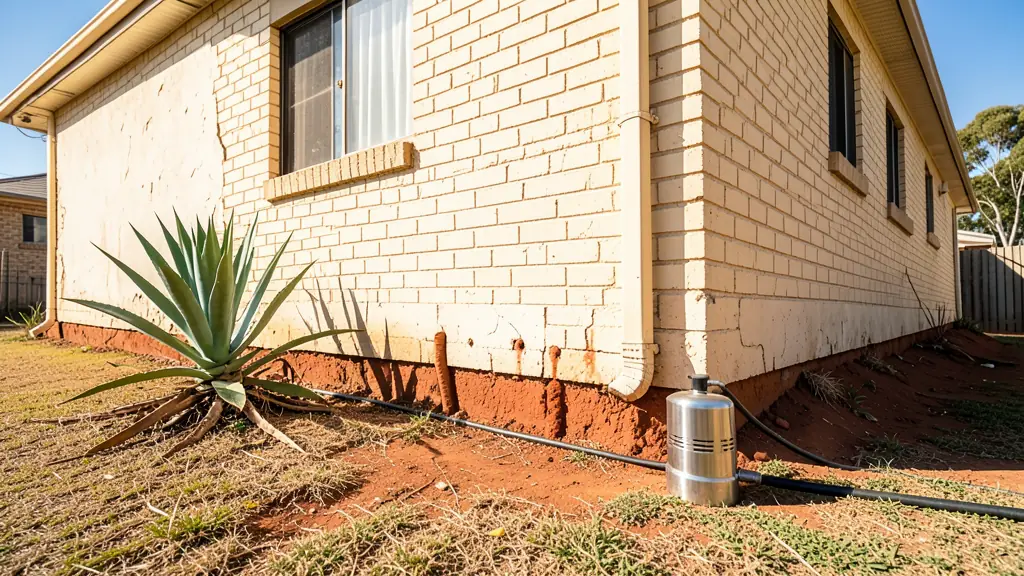
Termites, often called white ants, are among the costliest pests for South African homes. Three kinds matter: subterranean termites that nest in the soil and enter through the foundation, drywood termites that live inside roof timbers and furniture, and harvester termites that strip lawns and grass. The treatment depends on which one you have. Send one request and registered termite specialists near you quote for free, with a written guarantee.
Three termites, three treatments
Subterranean termites live underground and build covered mud tubes up walls to reach timber. They need moisture, so they favour leaking pipes and damp slabs. Drywood termites need no soil contact; they leave tiny pellets under roof beams and picture frames, and may need tent fumigation. Harvester termites forage at night and leave bare, crumbling patches in lawns and thin, straw-coloured cuttings; they seldom attack buildings but ruin gardens and sports fields. Most house damage in South Africa is done by subterranean species, which can go unseen behind plaster, skirting and wooden door frames for years before a floor sags or a frame crumbles. Thatch and timber trusses are also at risk when the roof void stays dry and warm.
Pre-treatment for new builds
Soil is treated with a termiticide such as bifenthrin or imidacloprid before the slab is poured, which forms a chemical barrier under the floor and around the foundation. The building code references SANS 10124, and many municipalities and bond providers ask for a pre-treatment certificate, so check the requirements with your architect or the municipality. Make sure the treatment is done once the plastic damp-proof membrane is ready but before the concrete, and ask for a written guarantee, often 5 to 10 years.
Existing houses: trenching and bait
In a finished house the operator digs a trench along the outside walls and drills holes through paving and concrete beside the wall, then injects the soil with termiticide. Inside, cracks in floors can be drilled and treated too. Timber that is already infested may be injected or sprayed.
Bait systems place stations in the ground around the home. Termites carry the slow-acting active ingredient back to the colony. They take months, but they suit gardens where drilling is difficult, and they can be monitored. Fix leaks, keep soil away from damp-proof courses and remove old stumps, firewood and wood stacks near walls. Do not build a flowerbed above the damp-proof course, because it gives termites a hidden path into the brickwork. Once the work is done, keep the receipt and any inspection reports with your title deeds.
Cost, guarantees and what to ask
A typical three bedroom house costs about R4,000 to R12,000 depending on perimeter and soil conditions, and a lawn treatment for harvester termites costs far less. Ask which product is used, how deep the barrier is, whether the guarantee includes a free re-treatment, and how often they inspect. A lower price that only covers part of the perimeter is a false saving, since termites find the one untreated gap. See the pest control price guide for typical amounts.
What to include in your request
- New build or existing house
- Floor area in m² and the building perimeter
- Mud tubes, wings or damaged timber seen
- Paving, slab or timber floors
- Borehole, pond or vegetable garden nearby
Termite Control for different properties
- Homes and families: trenching around the house walls or a bait system, with a guarantee of several years
- Landlords, agents and body corporates: an inspection and treatment before a lease, with a report that covers the timber structure
- Restaurants and food businesses: treatment of timber roofs and wall cavities, with records for the owner and insurer
- Hotels, guesthouses and lodges: treatment of thatch roofs, decks and timber chalets at lodges and guesthouses
- Offices, schools, clinics and shops: inspection of ceilings, door frames and timber floors in shops and offices
- Factories, warehouses and mines: soil treatment before a new factory slab and bait checks around storage yards
- Farms, grain stores and smallholdings: treatment of timber barns, poles and fences, and lawn damage from harvester termites
- Exporters and freight forwarders: inspection of timber stockyards and packing sheds to protect wooden stock
Frequently asked questions
How do I know I have termites and not rot?
Will termite treatment harm my garden?
How long does the guarantee last?
Are flying termites in my house an emergency?
Termite Control by province and city
- Johannesburg
- Pretoria
- Centurion
- Midrand
- Sandton
- Randburg
- Roodepoort
- Krugersdorp
- Randfontein
- Germiston
- Boksburg
- Benoni
- Kempton Park
- Alberton
- Vanderbijlpark
- Vereeniging
- Durban
- Pinetown
- Pietermaritzburg
- Richards Bay
- Newcastle
- Ladysmith
- Gqeberha (Port Elizabeth)
- East London
- Kariega (Uitenhage)
- Mthatha
- Cape Town
- Bellville
- Paarl
- Stellenbosch
- George
- Worcester
- eMalahleni (Witbank)
- Middelburg
- Secunda
- Mbombela (Nelspruit)
- Rustenburg
- Brits
- Klerksdorp
- Potchefstroom
- Mahikeng
- Polokwane
- Tzaneen
- Kimberley
- Upington
- Bloemfontein
- Welkom
- Sasolburg