Flies and mosquitoes are two very different problems that people often lump together. Flies carry bacteria from bins and drains onto food, which matters for a kitchen, a bakery or a butchery. Mosquitoes breed in water and bite at dusk, which matters for a garden, a guesthouse or a farm dam. Send one request with the insect, the place and where it breeds, and registered pest controllers in your area quote you directly. It is free and there is no obligation.
Know your fly before you treat it
The right method depends on the species. House flies breed in rotting waste, animal manure and wet bins, and lay eggs that become adults in about a week in warm weather. Blowflies are the metallic blue or green ones, drawn to meat and carcasses, so a dead rat in the roof void is a common cause. Fruit flies are tiny and breed in a film of fermenting sugar inside drains, bar taps and fruit crates, so spraying the air does nothing.
In all three cases, finding the breeding site is half the cure. Drains cleaned with an enzyme treatment, sealed bins and a daily waste routine do more than any insecticide.
Fly light traps, baits and sprays
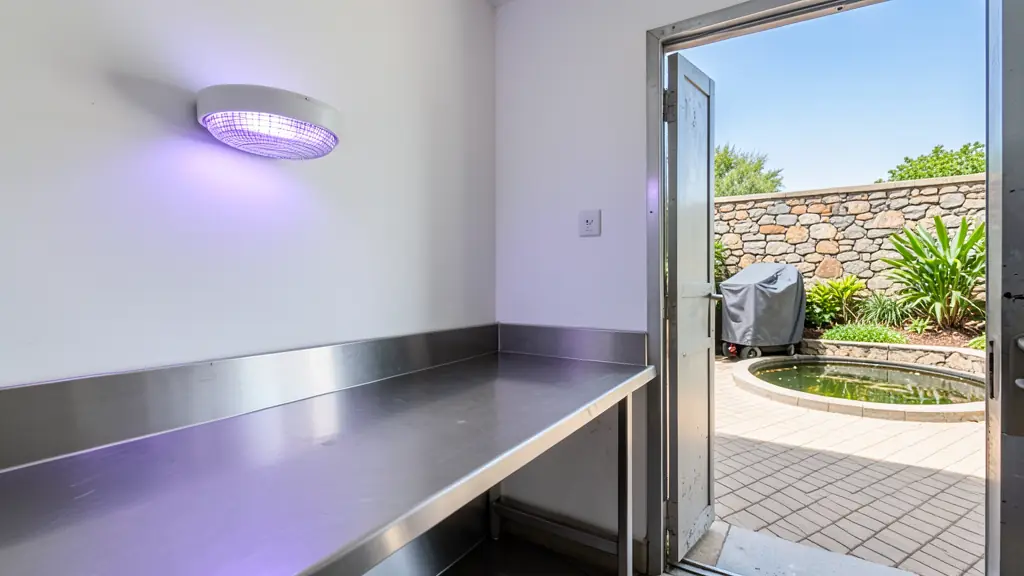
Food premises usually rely on UV light traps mounted away from prep tables and doors, with a glue board that is replaced every month or so, because the tubes lose their output after about a year even if they still glow. They should hang about two metres up and never in line of sight of the entrance, or they draw flies in.
- Fly bait in granules or paint-on form is used in bin areas and farm yards away from food and animals.
- Residual sprays on resting surfaces such as walls outside, fences and bin enclosures keep flies off for weeks.
- Fogging gives a fast knock-down of flying insects but no lasting effect, as explained under fogging and disinfection.
Mosquitoes: remove the water first
A mosquito needs only a bottle cap of still water to breed, and the larvae ("wrigglers") develop in about a week. Look for blocked gutters, plant saucers, old tyres, buckets, wheelbarrows, bird baths and neglected pools. Emptying water weekly and fitting a lid or mesh breaks the cycle.
Where water cannot be removed, such as ponds, drains and borehole sumps, a pest controller applies a larvicide that targets the larvae rather than the adults, with products suited to ponds that hold fish. A residual spray on shrubs and shaded walls then reduces the biting adults. Mosquito-borne disease is a concern in parts of Limpopo, Mpumalanga and northern KwaZulu-Natal, so ask your clinic or local health authority about precautions for your area.
What to put in your request
Name the insect, where you see it and where you think it breeds. Add the floor or ground area, whether a food audit applies, and if you need a once-off visit or a monthly service. Food businesses need records of trap checks for the commercial pest control file. Prices usually start around R450 for a once-off garden or bin area visit, and service contracts for kitchens depend on the number of traps.
What to include in your request
- Flies or mosquitoes, or both
- Where you see them and where they breed
- Kitchen, garden, pond or farm area in m²
- Whether audit records are needed
- Once-off visit or monthly service
Fly and Mosquito Control for different properties
- Homes and families: a garden and drain check for mosquitoes, with advice on gutters, saucers and a green pool
- Landlords, agents and body corporates: bin enclosures, communal drains and standing water treated for complexes and body corporates
- Restaurants and food businesses: UV light traps, drain cleaning and monthly trap records for audits and municipal inspections
- Hotels, guesthouses and lodges: kitchen flies, outdoor dining mosquitoes and pond larvicide, timed outside service hours
- Offices, schools, clinics and shops: bin rooms, tea rooms and pot plant saucers checked on a quarterly visit
- Factories, warehouses and mines: waste yards, canteens and loading bays treated with bait, traps and residual spray
- Farms, grain stores and smallholdings: manure, feed stores and dairy parlours treated for flies, with dam and trough mosquito control
- Exporters and freight forwarders: packhouses and depots protected with light traps and exclusion at doors and docks
Frequently asked questions
Why do I still see flies after spraying?
Where should a fly light trap go in a restaurant?
Do mosquito sprays harm bees and fish?
How often should flies be controlled?
Fly and Mosquito Control by province and city
- Johannesburg
- Pretoria
- Centurion
- Midrand
- Sandton
- Randburg
- Roodepoort
- Krugersdorp
- Randfontein
- Germiston
- Boksburg
- Benoni
- Kempton Park
- Alberton
- Vanderbijlpark
- Vereeniging
- Durban
- Pinetown
- Pietermaritzburg
- Richards Bay
- Newcastle
- Ladysmith
- Gqeberha (Port Elizabeth)
- East London
- Kariega (Uitenhage)
- Mthatha
- Cape Town
- Bellville
- Paarl
- Stellenbosch
- George
- Worcester
- eMalahleni (Witbank)
- Middelburg
- Secunda
- Mbombela (Nelspruit)
- Rustenburg
- Brits
- Klerksdorp
- Potchefstroom
- Mahikeng
- Polokwane
- Tzaneen
- Kimberley
- Upington
- Bloemfontein
- Welkom
- Sasolburg