
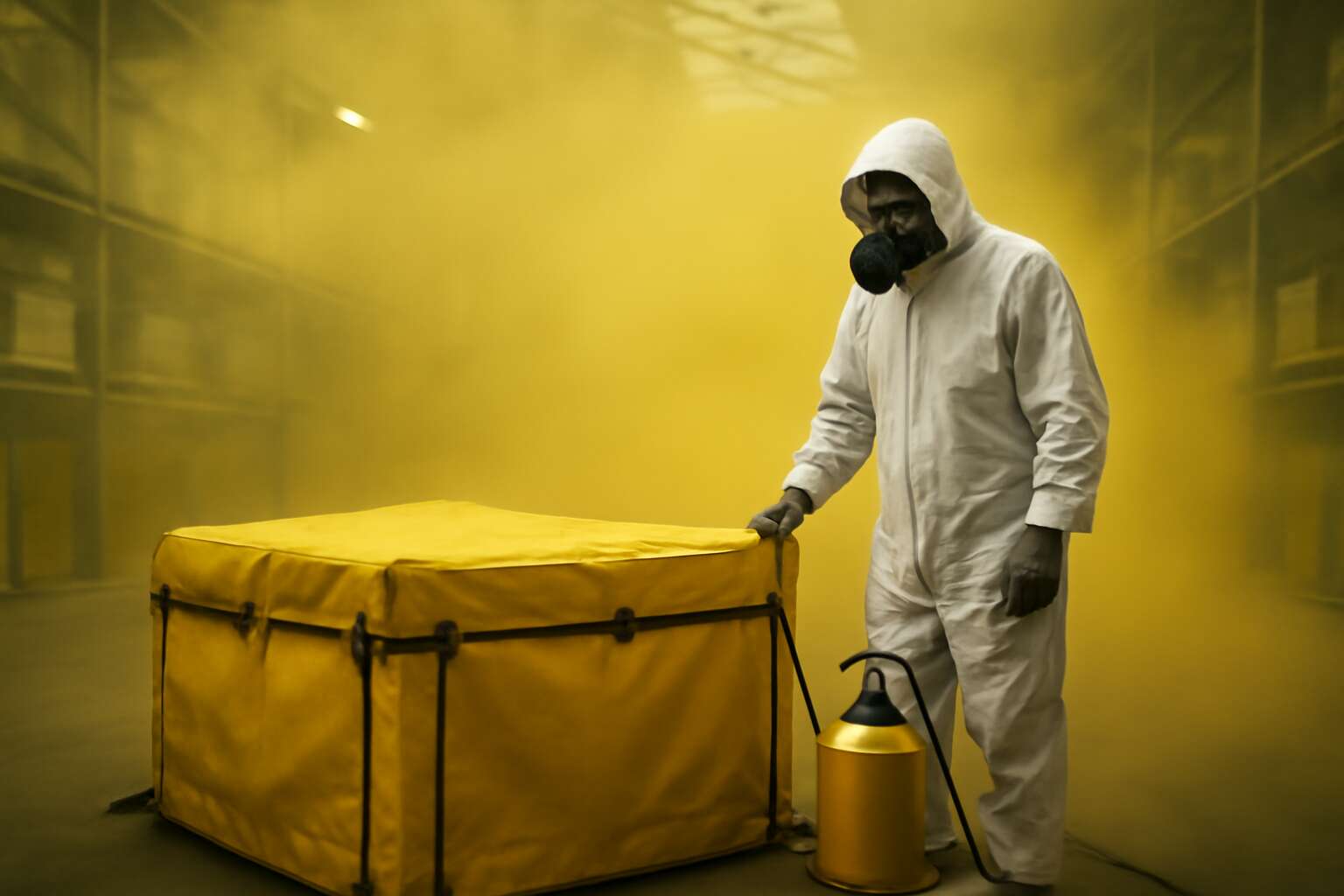
What is fumigation with sulphur
Definition and chemical basics
“The smoke of sulphur has guarded grain for generations,” a farmer once whispered as the veld glowed amber. In South Africa, post-harvest losses from pests still haunt storages and silos, a stubborn saga echoed by every farmer’s lantern.
The practice of fumigation with sulphur releases sulfur dioxide when elemental sulphur is heated, shaping a potent gas that travels through cracks and crevices to deter pests.
In chemical terms, SO2 disrupts respiration and moisture balance in insects and fungi. The gas is denser than air and works best in sealed spaces, while its toxicity calls for careful handling in any facility.
Key chemical facts include:
- SO2 forms from heated sulfur
- Gas penetrates cracks and crevices
- Ventilation and safety considerations
Historical use and evolution
Across South Africa’s storages, pests never forget to linger at harvest, and the stubborn answer has long been fumigation with sulphur. As a veteran storeroom keeper likes to say, “the smoke still keeps honest pests at bay.” In colonial and post‑colonial times, farmers burned sulphur in sealed rooms, letting a thin veil of sulphur dioxide settle over grain to deter mould and marauders.
From those ember‑stoked beginnings, the practice evolved into measured, regulation‑driven fumigations: sealed chambers, controlled durations, and prudent ventilation—never again left to chance.
- From open‑air smoke to sealed‑chamber routines
- From trial‑and‑error to standardized, recorded practices
- From pest deterrence to grain quality preservation
Even as modern warehouses hum with automation, the historical arc remains a footprint in the SA psyche—the sulphur craft that quietly shaped post‑harvest stewardship.
Common terminology in sulphur fumigation
Fumigation with sulphur is a measured art. In its simplest form, a controlled puff of sulphur smoke releases sulphur dioxide to protect stored grain from pests and mould. The goal is to balance efficacy with grain integrity, under regulated durations and ventilation.
Key terms you’ll encounter include:
- Sealed chamber
- Sulphur dioxide exposure
- Ventilation plan
- Dosage rate
- Fumigation duration
When done well, I see the operation feel almost ceremonial—a quiet guardian over harvests and a testament to modern storeroom stewardship!
Typical applications and contexts
In South Africa’s storerooms, a well-timed puff of sulphur can be the difference between a season saved and a season spoiled—a quiet guardian that keeps pests and mould in check without ruffling the grain’s dignity. Fumigation with sulphur in action is a controlled release that tethers risk to a sealed environment. I’ve watched this ritual unfold and it feels almost ceremonial—a disciplined mercy for harvests.
Typical applications span bulk maize and sorghum depots, pulses in cooperative warehouses, and facilities preparing grain for export or milling. In these contexts, the practice is less about drama and more about steady stewardship, balancing efficacy with grain integrity.
- Bulk storage facilities in commercial silos
- Cooperative depots and pre-export handling
- Smaller regional stores and distributing warehouses
When done well, it reads as almost ceremonial—punctual, precise, and curiously civilised.
That combination—sealing, regulated exposure, and ventilation—defines fumigation with sulphur in contemporary storerooms.
Applications and methods
Fumigation in agricultural storage and grain facilities
Storage pests never sleep, and their appetite can sting margins more than a drought ever did! In the South African grain landscape, a vigilant approach to post-harvest care is essential. It rests on principles like fumigation with sulphur that have earned a quiet reputation for restoring balance in crowded bins and silos.
Applications span maize, wheat, sorghum and pulses in agricultural storage and grain facilities. The method creates a controlled atmosphere that inhibits pests without leaving harsh residues on surfaces, and it suits older facilities where cooling and aeration are limited.
Methods vary by facility size and product form. In bulk storage, sealed environments and careful gas concentration monitoring matter; in bagged stock, envelope strategies adapt to retail-ready packaging. Common settings include:
- Silos and bulk storages
- Bagged grain rooms and palletized stacks
- Transport containers and loading bays
Across all contexts, technical expertise and regulatory oversight ensure safe, consistent results.
Fumigation for shipping, quarantine, and import/export controls
Global trade hinges on pest-free consignments. In SA, a single failed clearance can stall a port of entry for days and cost millions in demurrage. Fumigation with sulphur has earned a quiet, indispensable reputation for delivering a safe, residue-friendly treatment that fits the fast pace of shipping and quarantine checks.
Applications in shipping, quarantine, and import/export controls demand reliability under varied conditions. The approach uses sealed environments, controlled gas exposure times, and rigorous monitoring to protect products and borders without compromising resale value.
- Container fumigation in sealed intermodal units before loading
- Quarantine chamber fumigation at ports or processing facilities with real-time gas monitoring
- Certification and record-keeping to satisfy export and border authorities
As with agricultural storage, compliance oversight and trained personnel ensure consistent results, and South Africa’s regulatory framework shapes how these treatments are planned and executed across shipping lanes, export hubs, and import terminals.
In-house fumigation versus professional services
Across South Africa’s busy ports and grain horizons, choosing between in-house fumigation and professional services feels like picking a compass in stormy seas—the wrong call can strand shipments. Fumigation with sulphur requires meticulous sealing, precise exposure, and vigilant monitoring to protect cargo integrity while meeting border authorities.
- In-house fumigation demands trained operators, certified containment practices, and ongoing regulatory alignment.
- Professional services bring validated methods, real-time gas monitoring, and complete documentation that travels with each shipment.
- Choosing between them hinges on schedule flexibility, facility readiness, and risk tolerance for varied cargo types.
Both paths benefit from standardized procedures and clear oversight, ensuring consistent results across shipping lanes, ports, and processing facilities.
Sulphur forms and delivery methods
Across South Africa’s busy trade lanes, fumigation with sulphur finds its balance between tradition and precision. Solid forms—blocks and pellets—release controlled bursts of sulphur dioxide when sealed in a space, while gas-phase delivery pushes the atmosphere toward targeted pest profiles without overexposure. The art lies in matching form to cargo and container geometry, preserving integrity from dock to destination.
Key forms and delivery methods include:
- Elemental sulphur blocks or granules that generate sulphur dioxide in situ within a sealed hold.
- Pre-dosed pellets designed for uniform diffusion across compartments.
- Gas-phase delivery: direct injection of sulphur dioxide into the space with monitoring and safeguards.
Whether mounted in a tent, a ship hold, or a dedicated chamber, these approaches call for alignment with regulatory expectations and cargo-specific considerations, ensuring timing, sealing, and documentation stay in harmony within fumigation with sulphur programs.
Limitations and risks of different approaches
Across South Africa’s corridors of commerce, fumigation with sulphur negotiates the line between ancestral craft and modern precision. Elemental blocks, pre-dosed pellets, and gas-phase injections each tell a different story about cargo safety and timing. In sealed holds, the chemistry plays out as a controlled drama, where sulphur dioxide matures with the space’s geometry, regulation, and voyage. The art is to align form with container, cargo, and route, preserving integrity from dock to destination. Hold spaces move billions of rand in goods each year.
- Sealing integrity and gas retention depend on door and hatch design.
- Worker exposure and cargo sensitivity require meticulous monitoring and PPE protocols.
- Regulatory documentation and approvals can slow a voyage if misaligned with schedules.
Despite these caveats, thoughtful selection of form and timing elevates safety and efficiency, guiding shipments through port controls and cargo cycles with confidence.
Safety, regulations, and compliance
Health risks and exposure controls
South Africa treats fumigation with sulphur as serious business—a practice with a storied past and a demanding present. I’ve learned that when sulfur fumes drift into a space, luck favors the prepared. The regulatory stage is vast, and compliance is the quiet conductor that keeps workers safe and stakeholders confident.
To keep compliance sharp, key touchpoints include:
- Licensing and operator training
- Labeling, storage, and restricted access
- Environmental monitoring and meticulous record-keeping
Health risks and exposure controls are not mere footnotes in fumigation with sulphur; they color the narrative of any operation. Short-term exposure can irritate eyes and lungs; long-term exposure raises more serious concerns. In practice, this means thoughtful ventilation, containment, and appropriate PPE, all underpinned by clear emergency procedures and routine health surveillance.
Personal protective equipment and safe handling
Across South Africa’s storage and shipping hubs, safety is a currency, not a garnish. In facilities that treasure precaution, near-misses shrink by up to forty percent. Fumigation with sulphur demands reverence and restraint, and the quiet discipline of compliance becomes the most persuasive ally in any operation.
Regulatory landscapes act as the stage manager, deciding who may operate, how spaces are sealed, and how records travel from floor to policy. A compliant program for fumigation with sulphur aligns with national norms and international best practice, turning risk into responsibility and trust.
- Goggles or face shield
- Respiratory protection suitable for sulfur vapours
- Chemical-resistant gloves
- Long-sleeve coveralls and closed-toe footwear
Safe handling is a culture, not a checklist—the promise that every breath on site is safeguarded, and that emergency procedures are familiar, rehearsed, and available to every team member. That is the heart of fumigation with sulphur.
Regulatory standards, permits, and compliance
Safety in South Africa’s storage hubs isn’t a ritual; it’s a governance of trust etched in steel and air. Regulatory standards shape who may operate, how spaces are sealed, and how records move from floor to policy. A compliant program for fumigation with sulphur aligns with national norms and international best practice, turning risk into responsibility and trust.
Key regulatory touchpoints include:
- Permits and operator licensing aligned with national norms
- Facility sealing, ventilation verification, and exposure control requirements
- Comprehensive recordkeeping and audit readiness
- Staff competency, training, and periodic reassessment
In compliance, operations find a rhythm that supports efficiency, safety, and trust.
Environmental impact and waste disposal guidelines
Air quality is a non-negotiable KPI in South Africa’s storage hubs. A recent industry pulse shows that 70% of environmental incidents trace to improper waste handling in fumigation contexts—so the air you protect also protects the bottom line. Safety and compliance aren’t mere rituals; they’re investments in trust that show up as cleaner facilities and calmer audits.
Environmental impact from fumigation with sulphur centers on sulphur dioxide and residue management. Even a whiff can ripple through nearby ecosystems and workers if controls slip. High-level waste disposal guidelines emphasize containment, responsible treatment, and approved channels so nothing seeps into soil or water.
- Containment and capture of off-gases
- Waste residue handling through approved channels
- Air monitoring and regulatory reporting
South Africa-anchored practices align environmental stewardship with safety, turning potential penalties into performance—making responsible storage part of a trusted supply chain.
Emergency response and incident prevention
Safety, regulations, and compliance are not abstract ideals here; they’re the air we steward in South Africa’s storage hubs. A sharp reminder comes from industry data: 70% of environmental incidents trace to improper waste handling in fumigation contexts. When the process pivots on fumigation with sulphur, emergency response is not a plan stuck on a shelf—it’s a living protocol, visible in rapid alarms, controlled isolation, and coordinated contact with responders and regulators. The result is calmer audits and cleaner facilities—rare relief!
- Clear incident reporting channels accessible to all staff
- Containment of zones and controls for off-gases
- Cooperation with authorities for investigations
- Documentation and continual improvement after events
In a SA-centric safety culture, fumigation with sulphur becomes a governance story—a quiet driver of compliance, audits, and trusted supply chains. It reinforces accountability, aligning practice with the law and the expectations of partners across the value chain.
Efficacy, optimization, and best practices
Factors influencing fumigation effectiveness
Efficacy in fumigation with sulphur hinges on thorough space reach and how pests respond to the gas. In practice, the balance between gas concentration and exposure time shapes outcomes more than any single factor, a truth familiar to facilities across South Africa.
Optimization means aligning space, pest profile, and conditions. For example, fumigation with sulphur requires that containment and exposure considerations align. Key factors include seal integrity, material permeability, and the presence of vents that can leak gas. Different pests and life stages respond differently, so the chosen window must reflect local realities and regulatory expectations in South Africa, too.
Best practices emphasize risk-aware, responsible handling. The factors below help maintain efficacy while safeguarding people and environment:
- Containment and access control
- Non-target protection and space calibration
- Environmental stewardship and waste considerations
- Post-event assessment and recordkeeping
Pest monitoring and outcome measurement
Across facilities in South Africa, efficacy in fumigation with sulphur hinges on space reach and how pests respond to the gas. The real driver is the exposure window: balance gas concentration with time to allow the toxin to work where it matters. Optimization means aligning space, pest profile, and conditions—seal integrity, material permeability, and vent locations that can leak gas—so the treatment blankets every corner!
Pest monitoring and outcome measurement are the compass. After treatment, verification relies on targeted traps, visual inspections, and, where permitted, residual gas checks to confirm knock-down. Track results, record findings, and adapt plans as needed.
- Pre-treatment pest risk assessment and baseline
- During-treatment containment and environmental monitoring
- Post-treatment efficacy verification and recordkeeping
Best practices for safe and effective fumigation
A field snapshot from South Africa: when exposure windows are tuned to the pest, fumigation with sulphur delivers quicker knock-down and shorter downtime. Timing and containment matter—the gas works where it matters, not just where it’s released. It works when the clock and the space align!
Efficacy hinges on space reach and pest response. The real driver is the exposure window: duration times concentration to let the toxin work in hideouts. Optimization means aligning space, pest profile, and conditions—seal integrity, material permeability, and vent locations that can leak gas—so the blanket covers every corner.
Best practices for safe and effective fumigation with sulphur include the following:
- Containment integrity and minimized leakage for uniform gas distribution.
- Exposure window aligned with pest biology and space constraints.
- Environmental controls and ongoing monitoring to support even distribution.
- Documentation of results and post-treatment verification within regulatory boundaries.
Cost considerations and budgeting for fumigation projects
In fumigation with sulphur, efficacy hinges on space reach and pest response—the exposure window is the true performer, granting the toxin time to act while hideouts yield to the gas. The clock and the room must align: seal integrity, material permeability, and vent locations that keep the gas on target rather than wandering into rafters. When this alignment fails, downtime grows and outcomes falter.
Cost considerations begin with these components:
- Containment materials and durable seals
- Equipment, monitoring systems, and safety gear
- Labor costs, training, and downtime impact
- Permits, regulatory compliance, and waste handling
Smart budgeting favors upfront site assessment, phased treatment options, and a plan for post-treatment verification within South Africa’s regulatory boundaries.
Alternatives and integrated pest management comparisons
Pest pressure in South Africa’s storage facilities costs millions and keeps risk managers awake. Efficacy isn’t magic; it’s timing, space, and how the gas finds hidden nooks.
Fumigation with sulphur hinges on seal integrity, space reach, and pest willingness to surrender. When the exposure window lines up, the clock ticks in favor of the gas; misalignment makes outcomes wobble and downtime bite.
Optimization starts with upfront site assessment and ends with post-treatment verification within SA regulatory boundaries. Integrated pest management (IPM) offers alternatives worth considering:
- Monitoring-led interventions over blanket coverage
- Sanitation, moisture control, and exclusion tactics
- Where possible, non-chemical or physical options as complements
By weighing fumigation with sulphur against IPM-aligned strategies, teams balance risk, cost, and resilience—keeping facilities pest-tolerant without turning the space into a gas-filled roulette wheel.

0 Comments