
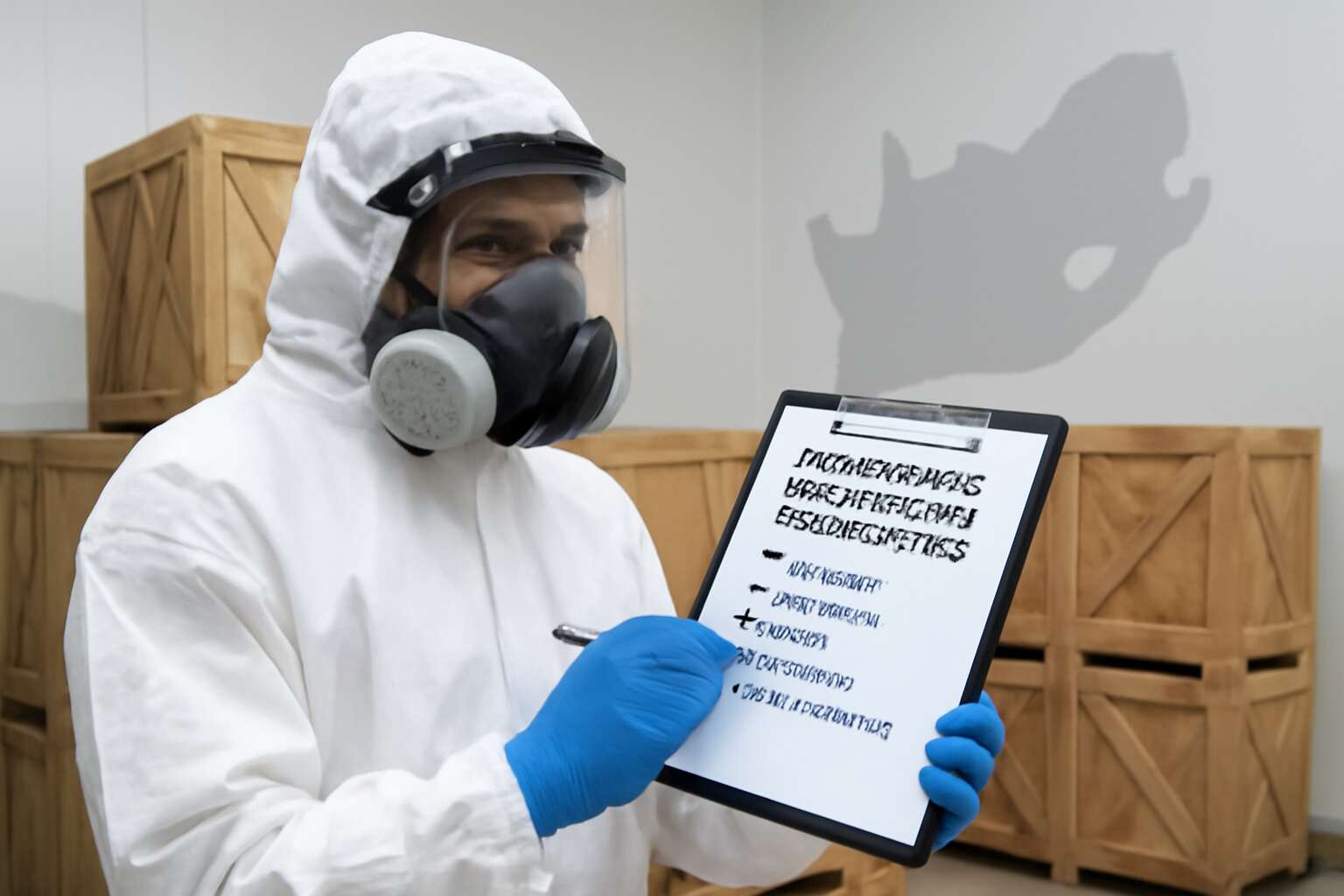
Understanding the regulatory landscape for fumigation in South Africa
What is fumigation and why it is regulated
From the quiet docks to dim storage rooms, fumigation carries a strange, patient gravity. “Regulation is the last line of defense,” an inspector once whispered, and I’ve seen that line hold when tests go green and alarms stay silent. Fumigation is the controlled deployment of gases to purge pests from goods and spaces, a practice guarded by fumigation regulations south africa.
Understanding the regulatory landscape means tracing practice to policy. The core elements include permits, trained operators, labeling, and post-treatment checks.
- Permits and approvals
- Certified operators and training
- Clear labeling and safe storage
- Post-treatment verification
Compliance in this field is a quiet ritual that protects people, trade, and the shadows between them.
Key laws and acts governing fumigation
Across South Africa’s ports, fumigation is a quiet engine that keeps supply chains intact—guided by fumigation regulations south africa.
Understanding the regulatory landscape means tracing practice to policy. Permits, trained operators, labeling, and post-treatment checks sit at the heart of compliance, guarding people and goods.
Key laws and acts govern fumigation, spanning hazardous substances control, worker safety, and environmental stewardship. They shape who may perform fumigation, how certifications are earned, and how residues are managed. The framework includes:
- Hazardous Substances Act and regulations
- Occupational Health and Safety Act and regulations
- National Environmental Management Act and related environmental controls
Together with sector guidelines, these laws shape who may apply fumigants, how training is demonstrated, and how residues are managed.
Regulatory bodies overseeing fumigation in South Africa
Across South Africa’s ports, millions of tonnes of cargo flow through each year, and the quiet engine that keeps that system moving is the compliance fabric around fumigation regulations south africa. Understanding the regulatory landscape means tracing practice to policy, from environmental safeguards to trade-friendly handling at docks.
- Department of Forestry, Fisheries and the Environment (DFFE) — environmental and chemical-use controls that shape fumigant approvals
- Department of Employment and Labour (DoEL) — worker safety standards and on-site protections
- South African Bureau of Standards (SABS) — national standards and conformity assessment to ensure quality and traceability
These authorities coordinate inspections, licensing, and enforcement actions, ensuring fumigation remains safe, accountable, and aligned with national goals for health, environment, and commerce.
Compliance prerequisites for businesses
Across South Africa’s ports, millions of tonnes of cargo move through every year, and the quiet engine behind that flow is the compliance fabric around fumigation regulations south africa. Understanding the regulatory landscape means tracing practice to policy—where environmental safeguards meet efficient handling at the docks and the demands of global trade. The stakes are high, and the path is clear, built on consistency and oversight.
Compliance prerequisites for businesses go beyond forms. They demand accredited approvals, ongoing staff training, precise record-keeping, and controlled fumigant storage—threads that inspections routinely test.
- Licenses and permits for fumigation activities
- Comprehensive worker safety training and PPE programs
- Robust chemical inventory management and waste disposal controls
When these elements stay in step, the system sustains health, environment, and commerce in a seamless rhythm. The regulatory framework is the quiet suspense fueling South Africa’s trade arteries, keeping shipments secure and the public safe.
Penalties for non-compliance
Across South Africa’s ports, millions of tonnes of cargo move through every year, and the regulatory compass around fumigation regulations south africa keeps that flow safe and accountable. Understanding the landscape means tracing practice to policy: penalties for non-compliance reinforce the line between orderly commerce and unsafe handling. The framework ties licensing, record-keeping, and responsible fumigant storage to inspections that reward consistency.
Penalties for non-compliance vary but share a common theme: accountability. Non-adherence can lead to fines, licence suspensions, or revocation; criminal charges may follow serious breaches, and repeated failures can close doors to operations. The following penalties commonly appear in enforcement actions:
- Unregistered fumigation activities
- Noncompliant fumigant storage or handling
- Failure to maintain required records
- Inadequate worker safety measures
Licenses, permits, and registrations for fumigation
Applying for fumigation licenses and permits
Licenses, permits, and registrations aren’t fun party favors for fumigation professionals, but they’re essential. In the realm of fumigation regulations south africa, a valid license signals that a company meets safety, training, and record-keeping standards—and that the fog you see is the right kind of fog, not a regulatory error!
To apply, you typically navigate a path that includes the following essentials:
- Current business registration and tax compliance status
- Proof of trained and certified fumigation supervisor(s)
- Site-specific fumigation plan outlining chemicals, dosage, and containment
- Environmental protection measures and waste disposal procedures
- PPE and equipment maintenance records
- Incident reporting and record-keeping protocols
Getting these in order under fumigation regulations south africa reduces risk and keeps audits friendly.
Registration of fumigants and approved products
In the realm of fumigation regulations south africa, paperwork is a quiet drumbeat—steady, essential, and never optional. Licenses, permits, and registrations are the gates that guarantee safety, accountability, and professional pride. When handled with clarity, the cloud deployed becomes a controlled, compliant spectacle rather than a regulatory misstep.
Registration of fumigants and approved products acts as a compass for every operation. A company must verify products are on the current approved list and that labels, safety data sheets, and dosage guidance align with local standards. To keep this wheel turning smoothly, consider these essentials:
- Valid product registration for fumigation use
- Up-to-date labeling and safety data sheets
- Batch tracking, expiry dates, and traceability procedures
- Approved storage, handling, and disposal procedures
Renewals, audits, and rigorous record-keeping seal the deal. In fumigation regulations south africa, staying proactive with documentation helps audits stay friendly and operations stay above reproach.
Record-keeping and reporting requirements
Across the ledger of best practice, licenses, permits, and registrations are the steady drumbeat that keeps fumigation operations aligned with safety and accountability. Within fumigation regulations south africa, these authorizations are not optional flourish—they gate the work, ensuring training is complete, products are on the approved list, and every action has traceable provenance. When the paperwork is clean and current, the cloud of risk disperses into a controlled, compliant spectacle rather than a regulatory misstep.
- Valid licenses and permit numbers with expiry dates
- Up-to-date registration documents, SDS, and dosage guidelines
- Comprehensive record-keeping: training certificates, transport, storage, and disposal logs
- Reporting obligations: incident reports, audits, and regulatory submissions
With these records in place, inspections become routine checks rather than hurdles, and your fumigation program travels with transparency and trust.
Transport and storage regulations for fumigants
In the realm of fumigation regulations south africa, licenses, permits, and registrations are the compass and clockwork that keep operations aligned with safety and accountability. For the transport and storage of fumigants, you must hold valid license and permit numbers with expiry dates, and you must keep up-to-date registration documents, SDS, and dosage guidelines. Comprehensive records—training certificates, transport and storage logs, and disposal manifests—are not optional; they forge a transparent path. A seasoned inspector once said, “Paper trails are safety’s backbone.”
Organizing these authorizations is not mere bureaucracy; it becomes the quiet engine behind smooth audits and safe movement of fumigants.
- Valid licenses and permit numbers with expiry dates
- Up-to-date registration documents, SDS, and dosage guidelines
- Comprehensive record-keeping: training certificates, transport, storage, and disposal logs
Within fumigation regulations south africa, these aligned records transform inspections from hurdles into trusted practice.
Inspections and audits for license compliance
A seasoned inspector once whispered, “Paper trails are safety’s backbone.” That spine shows up in fumigation regulations south africa, where licenses, permits, and registrations keep every operation accountable. For inspections and audits, you must have valid license and permit numbers with expiry dates, plus up-to-date registration documents, SDS, and dosage guidelines. That cadence of compliance is not a nuisance—it’s a shield against risk and delay!
- Valid license and permit numbers with expiry dates
- Up-to-date registration documents, SDS, and dosage guidelines
- Comprehensive records: training certificates, transport, storage, and disposal logs
Within fumigation regulations south africa, aligned records transform inspections from hurdles into trusted practice. The quiet engine of license compliance hums along, keeping audits straightforward and operations moving with confidence and clarity.
Safety, handling, and environmental considerations in fumigation
Hazard communication and worker safety standards
A single fumigation incident can halt operations for days and cost thousands in downtime. Understanding fumigation regulations south africa helps ensure safety, compliance and environmental stewardship from the ground up.
Hazard communication and worker safety sit at the core. Clear labels, updated safety data sheets, and training ensure that everyone knows the risks, the proper PPE, and the emergency steps to take if exposure occurs.
- PPE considerations for common fumigants
- Signage and area postings
- Ventilation controls during and after treatment
- Spill and exposure response planning
Environmental considerations focus on containment, waste handling, and minimizing off-site impact. Adhering to these standards supports compliance, reduces liability, and protects communities and ecosystems alike.
Storage, handling, and disposal of fumigants
The hush before fumigation is never innocent! A single misstep can pull the curtain on operations for days and drain a fortune in South Africa’s demanding regulatory theatre. In a landscape where downtime means hard currency, the stakes are high and penalties fierce.
Safety, storage, and environmental stewardship hinge on careful handling of fumigants. Within the fumigation regulations south africa, storage must be secure and ventilated, protected from heat and ignition; handling requires training, proper PPE, and clear signage.
- Store fumigants in locked, ventilated areas with secondary containment
- Keep inventory tight, seal containers, and separate incompatible materials
- Label all containers and ensure spill kits are accessible
Disposal and spill response demand disciplined procedures that follow national rules: absorbent materials, neutralization if appropriate, and licensed waste disposal contractors. Environmental concerns emphasize containment and preventing off-site migration; wastewater and soil must be treated and documented, with records kept for audits.
Emergency response and incident reporting
Across South Africa, a single mishandled plume can derail operations and drain budgets. Within fumigation regulations south africa, safety is a living practice: trained teams, certified PPE, and clear signage guide calm, decisive action. Emergency plans aren’t decorative; they steer responders through leaks, spills, or ventilation glitches while shielding workers and nearby communities.
Response and reporting play the starring role when incidents occur. Quick, documented decisions protect lives and the environment. Here are core considerations that keep everyone aligned:
- Adherence to the site emergency plan and escalation procedures
- Containment within approved containment boundaries and use of spill kits per protocol
- Prompt notification to supervisors, regulatory authorities, and environmental agencies
- Thorough incident documentation and a record of corrective actions and disposal plans
Environmental stewardship remains central: contain containment, prevent off-site migration, treat wastewater and soils, and maintain meticulous records for audits. When done right, fumigation operations stay compliant, efficient, and respectful of the land and people surrounding them.
Environmental impact and waste management
Plumes don’t just vanish; they travel. In South Africa, a single misstep can sour crops and communities alike, a reminder that safety is a living practice. As I navigate fumigation regulations south africa, I see trained teams keep action calm. “Safety is a responsibility that travels with every canister!” guiding every shift and spray.
Handling and environmental considerations go hand in hand. Proper containment, careful waste streams, and proactive monitoring protect air, water, and soil. Adhering to site-specific emergency plans minimizes off-site risk while maintaining community trust. Environmental impact and waste management demand meticulous records, from treatment of wastewater to secure disposal of residues.
- Containment within approved boundaries and use spill kits
- Treatment of wastewater and soils by licensed facilities
- Documentation and traceability for audits and permits
When safety lines up with responsible handling, fumigation operations stay compliant, efficient, and respectful of the land and people surrounding them.
Personal protective equipment requirements
Safety is a pact, not a mere protocol. In fumigation regulations south africa, PPE is the first and last line of defense against unseen hazards. It’s a sober reminder that protection is a shared responsibility, guarding workers, neighbors, and the land we all depend on.
Gearing up means more than compliance; it signals respect for life itself. The PPE kit should be comprehensive and resilient. Here are core components that travel with every shift:
- N95 or P100 respirators or equivalent supplied with organic vapor cartridges
- Chemical-resistant coveralls or suits
- Goggles or face shields
- Chemical-resistant gloves
- Protective boots and, where appropriate, hearing protection
Together with responsible handling and environmental stewardship, PPE anchors a culture where safety and care for the land go hand in hand.
Industry-specific compliance and best practices for fumigation operations
Fumigation in agriculture vs. commercial warehouses
Across South Africa’s farms, the dawn air carries both possibility and risk. From my years in the field, I’ve learned that safe fumigation is not a checklist—it’s a daily act of care that protects harvests and people.
In agriculture, timing, crop sensitivity, and on-site safety drive decisions. In large warehouses, containment, ventilation, and inventory discipline take the lead.
- Site-specific risk assessments and worker training
- Product compatibility, precise labeling, and sealed zones
- Ventilation planning and separation of fumigated spaces from public areas
These realities sit squarely under fumigation regulations south africa, reminding us that compliance is a shared duty that sustains livelihoods.
Quarantine and import/export fumigation requirements
Fewer things derail a shipment faster than fumigation hiccups. In South Africa, one lapse in compliance can stall a container for days or weeks and cost more than the price of the product. Fumigation regulations south africa are not simply bureaucratic red tape—they are operational guardrails that protect markets and workers alike.
Industry-specific compliance means tailoring practices to context. Quarantine and import/export requirements demand clear planning, government validation, and trained personnel.
- Quarantine-specific procedures and approvals for shipments
- Certified fumigants, accurate dosing, and on-site verification
- Documentation integrity and chain-of-custody throughout the supply chain
Adhering to these best practices keeps teams safe and shipments compliant, turning potential penalties into predictable operations.
International standards alignment and mutual recognition
Fumigation operations sit at the fault line between risk and reliability: a single misstep can stall a container for days, upending supply chains and eroding trust. In this climate, fumigation regulations south africa function as operational guardrails—guiding practical decisions while safeguarding markets and workers.
- Competency-driven teams that understand risk, regulatory nuance, and cross-border expectations
- On-site dosing checks and immediate verification using approved fumigants
- Transparent, end-to-end documentation and auditable chain-of-custody
International standards alignment and mutual recognition programs help the industry stay competitive while meeting the letter and spirit of trade. The aim is predictable operations that keep people safe and goods moving.
Documentation and certification for customers
In fumigation operations, compliance is less about fearsome rules and more about a reliable rhythm that keeps cargo moving. In South Africa, fumigation regulations south africa function as the contract between supplier and customer, shaping trust through clear expectations, timely paperwork, and proven results.
Documentation and certification adopted for customers must be precise, accessible, and auditable. To support this, industry-specific best practices include:
- Certificate of fumigation treatment for customers
- Detailed treatment report with method, conditions, and duration
- Material Safety Data Sheet and handling instructions
- Chain-of-custody documentation from plant to consignee
Training and competency requirements for operators
In South Africa’s logistics landscape, compliance isn’t a fearsome obstacle—it’s the steady heartbeat of cargo moving on time. Industry-specific compliance and best practices demand precise training, clear procedures, and verifiable results. When we talk about fumigation regulations south africa, it’s really a practical contract between supplier and customer, ensuring safety and reliability.
Training and competency requirements for operators are non-negotiable. Programs should cover regulatory basics, process steps, and safety culture, not just a one-off certificate.
- Certification prerequisites and ongoing refresher training
- Practical hands-on drills under qualified supervision
- Hazard communication, PPE, and emergency response awareness
Pair these with auditable records and routine audits to prove readiness. When operators are competent, the entire fumigation workflow stays predictable, compliant, and frankly less likely to derail a shipment.

0 Comments